


From Smith to STEM: Three Alums on the Transition into Male-Dominated Fields

“You just have to show up and exist”, was Professor Lesley-Ann Giddings’ advice for Smithies transitioning into their next chapter of life. But for many Smithies, transitioning from Smith to their male-dominated STEM fields can be a major challenge.
According to The United Nations Educational, Scientific and Cultural Organization (UNESCO), only 35% of students in STEM-related fields are women. Historically women’s colleges (HWCs) offer a safe haven for non-male students to engage with STEM in environments specifically catered toward them.
This environment made us curious about the challenges that Smithies face post-graduation. We asked three alums to reflect on their transition from Smith, and how it altered their perceptions or prepared them for the male-centric STEM industry.
Life After Smith

During her time at Smith, Emma Lesser (she/her) ‘22 was an engineering major and environmental policy minor. She currently works as an engineer at a consulting firm in the New England area. Lesser described her first job post-Smith as “an office with a lot of women in it”, allowing for a smooth transition after graduating.
Lesser then describes a co-worker of hers who acted as a “mentor” for her:
“She was someone who kind of taught me a little bit [about] how to navigate the industry and the things that most people aren't gonna tell you”.
Despite Lesser’s positive experiences, she goes on to describe distinct differences in Smith and industry culture:
“I think there was a difference moving from a college environment. Smith is a very inclusive space.” Lesser said, “You lose some of the specialness of Smith. [...] People don't introduce themselves with their pronouns. You're in an environment that's thinking a little less consciously about inclusion.”
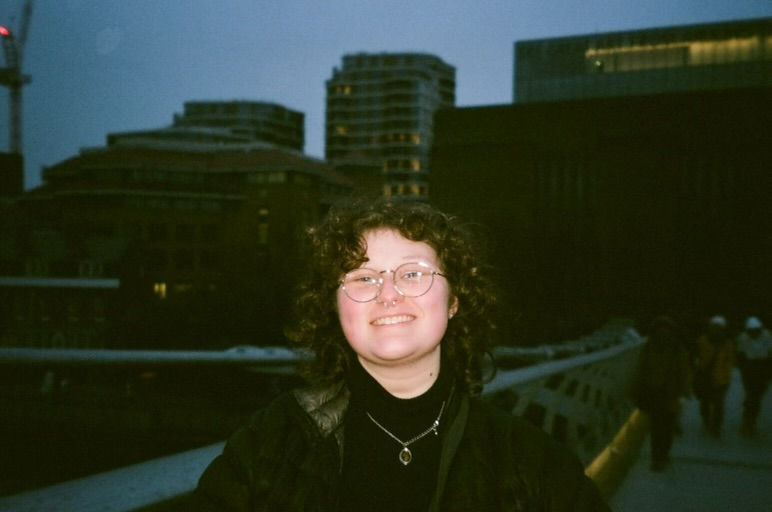
Sabrina Hatch (they/them)`25 graduated with a computer science and mathematics double major. Post-Smith, Hatch began working as a software engineer at a New England-based company.
“I will be honest,” Hatch said, “the transition to working in a very male-dominated field was a little bit tough, but I do think Smith definitely prepared me really well for it”.
Hatch’s tolerance for more misogynistic behavior “was already pretty low”, coming into Smith. After graduating, Hatch said “now I just have like none”. Hatch explained how they had to learn and adjust in a way that was professional, a process that isn’t always satisfying.
Professor Lesley-Ann Giddings (she/her) `05 graduated from Smith with a chemistry major and math minor. After earning her PhD in biochemistry at MIT, Giddings moved on to a three year postdoctoral fellowship at the National Cancer Institute before starting an independent position at Middlebury College. Today, she is an associate professor of chemistry at Smith College.

Giddings’ transition from Smith to MIT came with its own set of challenges.
“It’s a more sink or swim environment,” Giddings explained. She described the difference in rigor between the two schools, “I mean, it was just everything was at a higher level, and so that was challenging to rise to the occasion”.
Giddings talked about how she found people to support her, including her professors at Smith who assured her that they had taught her exactly what she needed to know, and encouraged her to take the next step.
“And I did," she said.
Giddings also echoed Lesser’s sentiment, explaining how Smith’s culture can be very different from other environments. Giddings described Smith as "politically active” during her time there. For her, the biggest difference between Smith and MIT was that of this activist culture.
“I don’t think that was as much of a priority [for MIT] as it was for Smithies”, Giddings said. She mentioned an incident at MIT where “I remember a Martin Luther King Jr. exhibit had been vandalized”. When Giddings sent out an email to her peers following the incident, she asked, "So when are we protesting? What are we doing?”, only to be nodded off with replies such as “I can't right now I have problem sets”.
Gender Related Challenges Post-Smith
We then asked our alums what specific gender-related barriers they faced post-Smith. We began with Professor Giddings, who described the differences between Smith and her post-grad classrooms.
At MIT, Giddings “definitely participated, and I didn't really see barriers in that regard. [...] I was one of the few women to ask questions in class, I did notice that, but it wasn't anything that held me back.”
When Giddings became a professor, she recalled seeing gender bias the most while teaching in a co-ed environment. “When I was a professor at Middlebury College, I would notice that [...] the women did not really say much in class, and then, especially in the lab, sometimes I would see guys who would kind of take over from their lab partner”.
She remembers one such scenario where students were asked to create a standard curve and figure out concentration in a lab.
“I went by this pair of lab partners and I noticed that the girl was helping the boy make 10 standards”, which seemed to Giddings like “overkill”.
Giddings told the girl, "Boy, 10 standards-that's like a lot.”
The girl responded by saying, "Well, you know, he wanted to do it this way, and it's just easier to say yes, and do what he thinks we should do, than to push back”.
“She's just willing to do all this extra work because she doesn't want to have a conversation that's uncomfortable”. Giddings then said, “But if she was in an environment like Smith, maybe she would have said something.”
Giddings explained that situations like these are what drew her back to Smith, “I think that the lack of women in top positions in science is [...] a big motivating factor for me to want to contribute to their education.”
Hatcha and Lesser, also reflected on the challenge of learning to speak up in their respective environments.
“Have you ever heard of the concept of ‘glue work’?” Hatch asked us.
Hatch then went on to explain, “it's this idea that a lot of things that a company or projects really needs to get done in order to be successful might not necessarily be highly technical".
Hatch glue-work as tasks like note taking, filing tickets, or organizing problems. “You can kind of even notice that these sort of things are expected of women in the workplace, or they automatically feel like they have to assume that role.”
We asked if Hatch had felt that same pressure when they were starting out in the industry.
“I think there were a couple times where I felt that way, and that's why I kind of make the point of really setting strong boundaries.” Hatch described a situation with a superior who continually asked them for glue-work-like tasks. “I came to my manager being like, ‘Hey, this person keeps asking me to do this thing. I just want to make sure we're on the same page, correct?’”
Hatch has now developed a professional but direct way to establish boundaries, “I'm prioritizing my time for this project, but I can point you to this, this, and this resource if you need help. If you have questions, you can ping me, but I will not be working on it”.
We asked Hatch if learning how to set these boundaries was something Smith prepared them for.
“I was not used to exercising that muscle,” Hatch said. “But at the same time, I feel like had I not gone to an HWC, I don't know that I would have had the foresight to [say], I need to focus on my career and my growth.”
“So I think, in some respect, it was something I had to sort of learn and be more comfortable with. But at the same time, I feel like the initial courage, or the hard part, I feel like I was already prepared for.”
We then asked Lesser about the challenges she faced in her office. Lesser describes how she feels her office dynamics are “a bit more balanced” than a typical company, due to the amount of women hired recently and a female CEO. However, Lesser goes on to describe the dynamics outside her office.
“Overall the [engineering] industry is quite male dominated. Like most of the vendors who are selling products? Lots of old men. The majority of people who work at wastewater treatment plants are men. The majority of people who do construction are men [… ] Most of the people that I interact with outside of my company, frankly, are men.”
Lesser explains how she’s had past issues with a specific male contractor, “And it's sometimes like I've told you this multiple times, and you're still not doing this.[...] I do wonder if he's reacting to me differently because I'm a woman.”
But Lesser explained that as she’s progressing through her career, she’s gaining more confidence in her capabilities and becoming better equipped to handle these situations with contractors.
“I feel like I initially came at things a little more gently with a little more professionalism. But over time, sometimes I've had to be a little more direct because at this point, I'm gaining more experience. I know something isn't right.”
Our Alums give us some Advice
To close out our interviews, we asked each alum what advice they would give to other STEM Smithies.
Emma Lesser mentioned advice she got from her office mentor. Lesser’s mentor reminded her that “the person who is the engineer also matters.” In other words, you’re more than just your work.
Lesser had to learn that her fellow colleagues and herself were more than just workers. By recognizing this fact, she learned the importance of creating comradery within the workplace and how it leads to a less male-centered environment.
“If you're able to find a pocket of community within a male-centered world, [it] is honestly great.”
Lesser continues on with her advice, “ when you're talking to someone about a task, you could ask how their day's going, and get context on the rest of their workload. So you're not gonna overload someone with a task. There's ways on a small scale to change the dynamics of a team that you're working with, so that it operates less in a male-centered way.”
When we asked Sabrina Hatch for their advice, Hatch said, “I would say they [Smithies] are already very well equipped and very intelligent. I don't think that my hope is that Smithies never feel afraid, it's like something that you know they can't control.”
“At the end of the day, you have total agency over your career and your success. You're already very successful. You're already very intelligent. [...] don't be afraid to set clear boundaries.”
Finally, when Giddings was asked for her advice:
“The first thing is to be true to yourself [...] I would really encourage people to have an open mind and believe that they can bring all aspects of themselves into a position, and have all aspects be valuable. Because I feel like a lot of times people try to fit in or put themselves in a box and neglect other aspects of themselves that actually make them unique”.
“I know everyone wants to leave employable and you will, but also, all of those interests make you who you are, and you never know what you can get out of them. Like you might find a way of carrying two very different disciplines together in a way that makes you a lot of money, you just have to show up and exist”.
By Kiku Nagai-Velasquez and Vivian Jenkins


